HRTech Pulse Exclusive Interview with Ted Kinney, Chief Scientist, Talogy
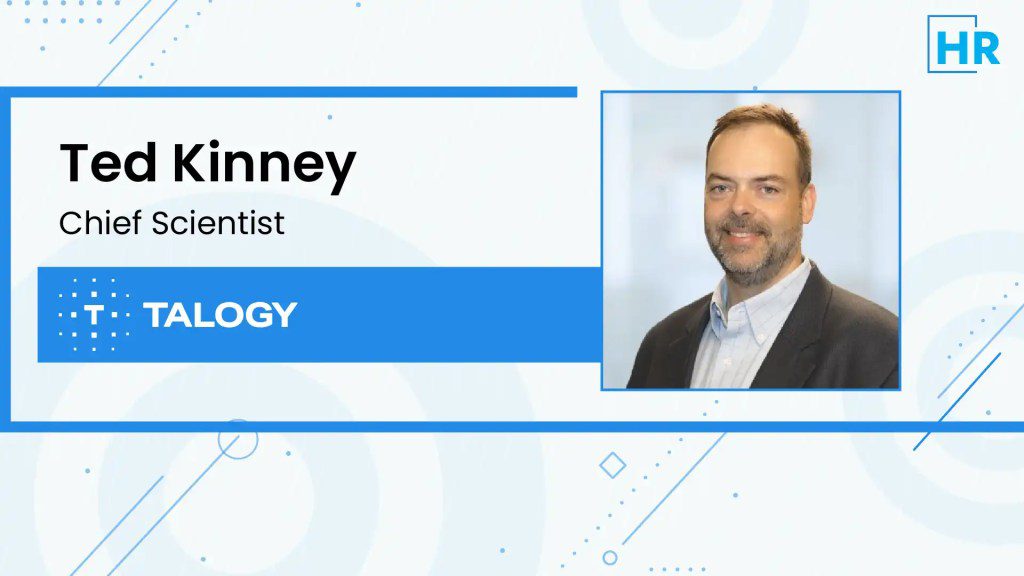
Dr. Ted Kinney, Chief Scientist at Talogy, discusses the evolution of talent assessment and how AI can deliver richer, more realistic insights into human potential.
What first drew you to psychology and human behavior, and how did that early curiosity shape your path into talent assessment and organizational science?
I’ve always been fascinated by why people behave the way they do. Early on, I realized that some of the most important decisions organizations make – who they hire, how they develop leaders, who gets promoted – are fundamentally questions about understanding people. That naturally drew me toward industrial-organizational psychology because it combines rigorous science with incredibly practical business impact.
What has kept me engaged over the past two decades is that the field continues to evolve. The questions haven’t really changed – we still want to understand potential, predict success, and help people thrive – but the tools available to answer those questions have changed dramatically. Today, AI, immersive simulations, and richer behavioral data allow us to observe capabilities in ways we couldn’t have imagined when I started.
For me, though, the technology has never been the point. It’s always been about using better science to make better human decisions. That’s the thread connecting my career – from early validation studies to today’s work exploring how AI can enhance assessment while remaining grounded in evidence, fairness, and trust.
Over nearly two decades in assessment science, what’s the biggest shift in how organizations evaluate potential that’s changed your own thinking about measuring talent well?
The biggest shift has been moving away from thinking of assessment as a test and toward thinking of it as evidence collection.
Traditional assessments often ask people to tell us about themselves. Increasingly, we can observe how people think, solve problems, communicate, prioritize, and adapt in realistic situations. That’s a fundamentally richer source of information.
At the same time, organizations have become much more sophisticated consumers of assessment science. They don’t just ask whether an assessment predicts performance. They also want to understand fairness, candidate experience, explainability, scalability, and how assessment integrates into the broader talent ecosystem.
That has reinforced something I’ve believed throughout my career: no single measure tells the whole story.
The best talent decisions come from combining multiple sources of evidence, understanding context, and recognizing that assessment should support – not replace – good human judgment.
Technology is making that easier than ever, but it’s also raising the bar for doing assessment responsibly.
AI is reshaping how skills and behaviors get assessed. What separates genuinely useful AI-powered assessment from tools that just add a flashy interface on top?
For me, the distinction is surprisingly simple: does AI create better evidence, or does it simply create a more interesting experience?
There’s a lot of excitement around conversational interfaces, avatars, and generative AI. Those can absolutely improve engagement. But if they’re not grounded in sound behavioral science, they don’t necessarily improve the quality of the assessment.
The most valuable applications of AI help us capture richer behavioral data, adapt intelligently to candidates, reduce administrative burden, and provide more meaningful insights to decision makers. Importantly, they should also make assessments more accessible and improve the candidate experience without sacrificing scientific rigor.
AI shouldn’t replace decades of assessment science; it should amplify it.
That’s why I often think about AI as an incredibly capable collaborator. It can help generate simulations, personalize experiences, analyze complex behavioral patterns, and uncover insights that humans might miss. But humans remain responsible for defining what success looks like, validating the evidence, ensuring fairness, and making the final decisions that affect people’s careers.
Simulation-based assessments promise richer insight than traditional tests. What are the biggest barriers organizations still face in making simulations both scalable and fair at once?
Historically, simulations have delivered excellent insight but have been expensive to develop, difficult to scale, and time-consuming to score. That’s one reason organizations often reserved them for executive hiring or high-volume leadership programs.
AI is beginning to change that equation.
We’re reaching a point where organizations can create much more dynamic, personalized simulation experiences while dramatically reducing development effort. That’s exciting because it opens the door to richer assessments across many more roles.
The challenge is making sure we don’t confuse realism with validity.
A beautifully designed simulation isn’t automatically measuring the right things. Every interaction, scoring decision, and behavioral indicator still needs to be tied back to competencies that matter for success on the job. We also have to continually evaluate fairness across different candidate groups and ensure AI isn’t introducing unintended bias.
The opportunity isn’t simply to make simulations more realistic – it’s to make them scientifically stronger while expanding access to assessments that previously weren’t practical at scale.
Talogy blends decades of behavioral science with new immersive simulation technology. What does “getting the science right” actually look like behind the scenes?
The science starts long before anyone builds technology.
First, we need to understand what successful performance actually looks like. That means identifying the critical competencies, behaviors, and decisions that distinguish high performers. From there, every scenario, prompt, scoring model, and interpretation should be designed to measure those constructs intentionally.
Technology is an enabler, not the foundation.
As AI becomes more capable, it becomes tempting to let technology drive design. I think the better approach is exactly the opposite. Start with the science, then ask how technology can help us measure those behaviors more naturally, efficiently, and accurately.
“Getting the science right” also means continuously validating what we’ve built. Are we predicting performance? Are we providing equitable outcomes? Are candidates having a positive experience? Can organizations trust the results enough to make important decisions?
If we can’t answer yes to those questions, the technology doesn’t matter.
How can organizations use assessment data to build genuinely more diverse, inclusive talent pipelines rather than treating it as a compliance checkbox?
One of the greatest strengths of assessment is its ability to shift attention away from pedigree and toward demonstrated capability.
Organizations often have far more talent available than they realize, but traditional screening methods can unintentionally narrow the field before people have an opportunity to demonstrate their potential.
Well-designed assessments help create a more level playing field by evaluating job-relevant behaviors consistently across candidates. That’s critical for fairness, but it’s also good for business because organizations gain access to stronger and more diverse talent.
The key is viewing diversity as an outcome of better decision-making rather than a separate initiative.
Organizations should continuously analyze assessment outcomes, validate that measures remain predictive and equitable, and look for opportunities to reduce unnecessary barriers throughout the hiring process.
In my experience, organizations that approach inclusion through better science, not simply better intentions, tend to create more sustainable results.
Looking ahead one to two years, how do you expect AI and simulation technology to change the everyday experience of being a job candidate?
I think candidates will experience assessments that feel much more like doing the job and much less like taking a test.
Instead of static questionnaires, we’ll see interactive conversations, adaptive simulations, realistic workplace scenarios, and personalized experiences that better reflect the role someone is applying for.
Ironically, I think the technology will become less visible.
Candidates won’t necessarily think, “I’m interacting with AI.” They’ll simply feel that the assessment understands context, responds naturally, and gives them better opportunities to demonstrate what they can do.
That said, organizations also have a responsibility to be transparent about how AI is being used, how decisions are made, and how candidate data is protected. Better experiences shouldn’t come at the expense of trust.
Ultimately, I hope AI makes assessments feel more human, not less.
What’s one piece of advice you’d give HR and talent leaders who feel overwhelmed by the pace of change in assessment technology right now?
Don’t start with the technology.
Start with the talent decision you’re trying to improve.
It’s easy to become distracted by the latest AI capability or the newest platform. But organizations rarely create value simply by adopting new technology. They create value by solving meaningful business problems.
Ask yourself:
Are we identifying potential more accurately?
Are we improving candidate experience?
Are we making hiring managers more effective?
Are we increasing confidence in important talent decisions?
If AI helps accomplish those goals, embrace it enthusiastically.
If it doesn’t, it’s okay to wait.
Technology will continue to evolve at an incredible pace. The principles of good assessment – scientific rigor, fairness, transparency, and a focus on helping people succeed – have remained remarkably consistent for decades. I suspect they’ll still be the principles guiding us long after today’s AI headlines have faded.
Thank you, Ted, for taking the time to share your insights with us.
Write to us [wasim.a@demandmediaagency.com] to learn more about our exclusive editorial packages and programmes.
Dr. Ted Kinney is the Chief Scientist for Talogy. Over the past three decades, he has guided scientific teams in delivering evidence-based talent solutions while pioneering the integration of new technologies now used to assess millions of individuals worldwide. Dr. Kinney partners regularly with global organizations to create innovative technology-enabled assessment programs.
His current interests are in the areas of human-AI collaboration, interactive assessments and simulations, and participant experience. He is a recognized thought leader and advisor on topics related to talent solutions for employee selection and development, assessment validation and research, legal compliance, and the future of work.
Ted earned his PhD in Industrial-Organizational Psychology from The Pennsylvania State University and is a Fellow in the Society for Industrial/Organization Psychology (SIOP).
Talogy is one of the world’s leading talent management solution providers. Crafting personalized solutions to help select, develop, and transform talent and organizations worldwide.
Talogy partners with organizations to truly understand their challenges inside out and help them make the best data-driven people decisions.
Combining 75+ years of expertise, an extensive content library, and innovative technology, Talogy helps clients find, build, and grow the best talent. https://talogy.com/en/