The Rise of AI Workforce Twins: How HRTech Is Simulating the Future of Work
Stay updated with us
Sign up for our newsletter

For years, organisations relied on historical data and managerial assumptions to make workforce decisions. Hiring plans, restructuring initiatives, succession strategies, and productivity forecasts were often built on static reports and periodic assessments.
However, the growing complexity of modern workforces is making traditional workforce planning increasingly inadequate.
As organisations navigate rapid technological change, evolving employee expectations, hybrid work models, and AI-driven transformation, a new concept is emerging within HR technology: AI workforce twins.
For HR leaders, this represents a significant shift—from reactive workforce management to predictive workforce intelligence.
What Are AI Workforce Twins?
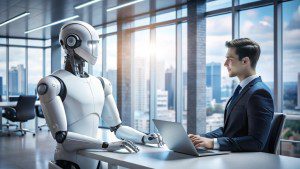
An AI workforce twin is a digital representation of an organisation’s workforce created using real-time data, AI models, and workforce analytics.
These systems aggregate information from multiple sources, including:
- HR management systems
- Performance platforms
- Skills databases
- Learning systems
- Collaboration tools
- Workforce productivity data
- Employee engagement platforms
AI then models workforce relationships, capabilities, behaviours, and trends to create a dynamic simulation environment.
Rather than functioning as a static dashboard, a workforce twin continuously evolves as workforce conditions change.
Why Traditional Workforce Planning Is Losing Effectiveness
Traditional workforce planning models were designed for relatively stable environments where roles, organisational structures, and business priorities changed gradually.
Today’s reality is significantly different.
Organisations now face:
- Rapid shifts in required skills
- AI-driven job transformation
- Distributed workforce models
- Faster business cycles
- Greater employee mobility
- Continuous restructuring pressures
Static workforce reports struggle to capture these dynamics in real time.
As a result, many workforce decisions remain reactive rather than strategic.
AI workforce twins aim to address this gap by enabling organisations to model future workforce conditions before making decisions.
How Workforce Twins Work
Workforce twins rely on a combination of technologies, including:
- Artificial intelligence and machine learning
- Workforce analytics platforms
- Skills intelligence systems
- Organisational network analysis
- Predictive modelling engines
These systems continuously analyse workforce data to identify patterns and simulate potential outcomes.
For example, organisations can model scenarios such as:
- The impact of automation on workforce composition
- Future skill shortages across departments
- Attrition risks within critical teams
- Effects of restructuring initiatives
- Internal mobility pathways
- Leadership succession readiness
This allows leaders to evaluate multiple workforce strategies before implementation.
Also Read: From Static Hierarchies to Living Systems: Rethinking Org Charts in AI-Driven Companies
The Shift from Historical Reporting to Predictive Intelligence
One of the most significant advantages of workforce twins is their ability to move organisations beyond retrospective analysis.
Traditional HR analytics often answer questions such as:
- What happened last quarter?
- Which teams experienced attrition?
- How many employees completed training?
Workforce twins, however, focus on forward-looking questions:
- Which skills will become critical in the next two years?
- Which teams are most vulnerable to burnout or attrition?
- How will AI adoption affect workforce structures?
- Where should organisations invest in reskilling?
This predictive capability strengthens strategic workforce planning significantly.
Skills Intelligence and Workforce Simulation
Skills intelligence plays a central role in workforce twin models.
Modern organisations increasingly recognise that workforce adaptability depends on skills visibility rather than static job titles.
Workforce twins can map:
- Existing workforce capabilities
- Emerging skill gaps
- Skill adjacency opportunities
- Reskilling pathways
For example, if a business unit faces a future shortage in AI-related capabilities, the workforce twin may identify employees with adjacent skills who could transition into those roles through targeted development programs.
This creates more agile and resilient workforce strategies.
Organizational Design and Workforce Agility
AI workforce twins are also influencing organisational design.
Traditional organisational structures are often hierarchical and rigid. Workforce twins enable organisations to simulate more dynamic structures based on:
- Skills distribution
- Collaboration patterns
- Workload capacity
- Cross-functional dependencies
This supports more adaptive workforce models aligned with project-based and AI-augmented work environments.
In AI-driven organisations, organisational structures may increasingly evolve continuously rather than remain fixed.
Also Read: When HRTech Becomes a Barrier: The Hidden Cost of Fragmented HR Systems
The Role of AI in Employee Experience
Beyond workforce planning, workforce twins may also influence employee experience strategies.
By analysing engagement patterns, collaboration data, and career progression trends, organisations can better understand:
- Workforce sentiment
- Learning needs
- Career mobility barriers
- Workload distribution
This enables more personalised employee development strategies while improving workforce retention and engagement.
Challenges and Ethical Considerations
Despite their potential, workforce twins raise important ethical and governance questions.
1. Employee Privacy
Workforce twins depend on extensive employee data collection.
Organisations must ensure transparent governance around:
- Data usage
- Consent policies
- Monitoring practices
- Employee privacy protections
Without trust, workforce intelligence systems risk creating employee resistance.
2. Algorithmic Bias
AI models may unintentionally reinforce existing workforce inequalities if training data reflects biased historical patterns.
Bias mitigation and human oversight remain essential.
3. Over-Reliance on Predictive Models
While predictive systems improve visibility, workforce decisions still require human judgment.
Organisations must avoid treating workforce simulations as deterministic outcomes.
- Governance Complexity
As workforce twins become more sophisticated, organisations will require governance frameworks that define:
- Accountability
- Data ownership
- Ethical boundaries
- Decision transparency
This will likely become a major focus area for HR and compliance leaders.
The Future of Workforce Intelligence
AI workforce twins remain an emerging capability, but adoption is expected to accelerate as organisations seek more adaptive workforce planning models.
Future developments may include:
- Real-time workforce simulations
- AI-generated workforce restructuring scenarios
- Continuous capability forecasting
- Integrated digital employee ecosystems
- Predictive workforce health monitoring
As AI continues reshaping work, organisations will increasingly rely on intelligent workforce systems to navigate uncertainty.