Rethinking Productivity: How HRTech Is Redefining Performance in AI-Augmented Organizations
Stay updated with us
Sign up for our newsletter

Productivity has long been a defining metric of organisational success. Traditionally, it was measured through output volume, hours worked, and efficiency ratios. These indicators reflected an industrial-era mindset where work was linear, roles were clearly defined, and performance could be quantified through tangible deliverables.
However, the nature of work has fundamentally changed.
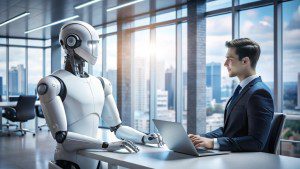
In AI-augmented organisations, where human capabilities are enhanced by intelligent systems, productivity is no longer just about how much work is completed. It is increasingly about how effectively humans and machines collaborate to generate value.
This shift is prompting organisations to rethink how productivity is defined, measured, and managed, and HR technology is at the centre of this transformation.
Also Read: The Evolution of Talent Acquisition: How AI Is Redefining Hiring Strategies
The Limitations of Traditional Productivity Metrics
Conventional productivity metrics were designed for environments where tasks were repetitive and outputs were predictable. In such settings, measuring efficiency was relatively straightforward.
In contrast, modern work environments are characterised by:
- Knowledge-driven roles
- Cross-functional collaboration
- Rapidly changing priorities
- Increasing reliance on digital tools and AI systems
In these contexts, traditional metrics such as hours worked or task completion rates provide an incomplete picture of performance.
For example, an employee leveraging AI tools may complete tasks faster, but the true value lies in how effectively they use those tools to improve quality, innovation, and decision-making.
This complexity requires a more nuanced approach to productivity measurement.
AI-Augmented Work: A New Productivity Paradigm
AI augmentation does not replace human work; it enhances it. Employees use AI systems to analyse data, generate insights, automate routine tasks, and support decision-making.
This creates a new productivity paradigm where performance is influenced by:
- The ability to leverage AI tools effectively
- The quality of decisions made using AI insights
- Collaboration between human teams and digital systems
- Continuous learning and skill adaptation
In this environment, productivity becomes a function of capability, context, and collaboration, rather than just effort.
The Role of HRTech in Redefining Productivity
HR technology platforms are evolving to capture and analyse new dimensions of productivity.
Modern HRTech systems integrate data from multiple sources, including:
- Work management and collaboration tools
- Performance management systems
- Learning and development platforms
- Workforce analytics solutions
By combining these data streams, organisations can gain a more comprehensive view of how work is performed and where value is created.
From Activity Tracking to Outcome Measurement
One of the most significant shifts enabled by HRTech is the move from tracking activity to measuring outcomes.
Instead of focusing on how much time employees spend on tasks, organisations are increasingly evaluating:
- The impact of work on business objectives
- The quality and effectiveness of outputs
- The speed and accuracy of decision-making
- The ability to innovate and solve complex problems
AI-powered analytics tools can assess these factors by analysing performance data, project outcomes, and collaboration patterns.
Also Read: Agentic AI in HRTech: How Autonomous AI Agents Are Reshaping Talent Strategy
Personalised Productivity Insights
AI-driven HRTech platforms enable organisations to generate personalised productivity insights for employees.
These systems can:
- Identify individual strengths and areas for improvement
- Recommend tools or workflows to enhance efficiency
- Suggest learning opportunities to develop relevant skills
- Provide real-time feedback on performance
Personalised insights empower employees to optimise their own productivity, creating a more proactive and engaged workforce.
Collaboration as a Productivity Driver
In AI-augmented organisations, productivity is increasingly influenced by collaboration.
Work is rarely performed in isolation. Teams rely on shared knowledge, digital tools, and coordinated workflows to achieve outcomes.
HRTech platforms can analyse collaboration patterns by examining:
- Communication frequency and quality
- Cross-functional interactions
- Knowledge-sharing behaviours
- Contribution to team objectives
These insights help organisations understand how collaboration impacts productivity and identify opportunities for improvement.
Redefining Performance Management
The evolution of productivity is also reshaping performance management systems.
Traditional performance reviews often focus on individual achievements and predefined metrics. However, in AI-augmented environments, performance is more dynamic and context-dependent.
Modern HRTech platforms support:
- Continuous performance tracking
- Real-time feedback mechanisms
- Integration of AI-driven insights into evaluations
- Recognition of collaborative and adaptive behaviours
This approach ensures that performance assessments reflect the complexities of modern work.
Balancing Measurement and Trust
As organisations adopt advanced productivity measurement tools, they must balance data-driven insights with employee trust.
Excessive monitoring can lead to concerns about privacy and autonomy. Employees may feel that their work is being overly scrutinised, which can negatively impact engagement.
To address this, organisations should:
- Focus on outcome-based metrics rather than activity tracking
- Ensure transparency in how data is collected and used
- Provide employees with access to their own performance insights
- Establish clear governance frameworks for data usage
Building trust is essential for the successful adoption of HRTech-driven productivity models.
Challenges in Redefining Productivity
Transitioning to new productivity models presents several challenges.
- Defining meaningful metrics
Organisations must identify indicators that accurately reflect value creation. - Integrating diverse data sources
Combining data from multiple systems requires robust integration capabilities. - Managing change
Employees and managers must adapt to new ways of measuring and understanding performance. - Ensuring fairness and consistency
AI-driven insights must be monitored to prevent bias and ensure equitable evaluation.
Addressing these challenges requires a strategic and thoughtful approach.
Conclusion
HRTech is playing a pivotal role in redefining productivity for AI-augmented organisations. By enabling data-driven insights, personalised feedback, and outcome-based measurement, it is transforming how performance is understood and managed.
In this new paradigm, productivity is not about working more, it is about working smarter, leveraging technology effectively, and creating meaningful impact.
Organisations that embrace this shift will be better positioned to build agile, high-performing workforces capable of thriving in an increasingly complex and technology-driven environment.
Write to us [wasim.a@demandmediaagency.com] to learn more about our exclusive editorial packages and programmes.