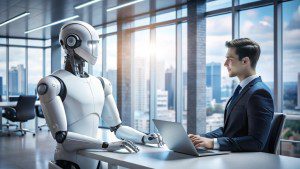
Productivity in AI-Augmented Organizations: Are We Measuring the Wrong Things?
Stay updated with us
Sign up for our newsletter

Organizations measured output through hours worked, tasks completed, sales generated, projects delivered, or operational efficiency. These metrics worked reasonably well in traditional workplace environments where human effort was the primary driver of business outcomes.
Today, however, the rise of artificial intelligence is fundamentally changing how work gets done.
AI-powered tools can generate reports, analyze data, draft content, automate workflows, and support decision-making in a fraction of the time previously required. As a result, organizations are beginning to question whether traditional productivity metrics still reflect actual workforce value.
For HR leaders, this presents a critical challenge:
How do you measure productivity when humans and AI are working together?
The Productivity Paradox of AI
Many organizations are investing heavily in AI to improve efficiency and accelerate business performance.
Yet measuring the impact of these investments is proving difficult.
Consider two employees performing similar roles.
One spends eight hours completing a task manually.
Another uses AI tools to achieve the same outcome in two hours while delivering comparable or better quality.
Traditional productivity measures may focus on activity levels or time spent working. However, in AI-augmented environments, outcomes increasingly matter more than effort.
This shift is creating a productivity paradox where employees may appear less active while delivering significantly greater value.
Also Read: AI Is Reshaping Recruitment Process Outsourcing: What Happens When Hiring Becomes Intelligent?
Why Traditional Metrics Are Losing Relevance
Many performance indicators were developed for industrial and administrative work models.
Common measures include:
- Hours worked
- Utilization rates
- Task volume
- Process completion
- Time spent on activities
In AI-enabled workplaces, these metrics can become misleading.
Employees who effectively leverage automation often spend less time on repetitive tasks and more time on strategic work, innovation, and problem-solving.
Organizations that continue measuring activity instead of impact may struggle to identify their highest-performing talent.
The Shift from Efficiency to Value Creation
AI is not simply helping employees work faster.
It is changing the nature of work itself.
Routine activities are increasingly automated, while human contributions are becoming more focused on:
- Critical thinking
- Decision-making
- Creativity
- Collaboration
- Relationship management
- Strategic problem-solving
As a result, productivity measurement must evolve beyond efficiency metrics toward value creation metrics.
The most productive employees may not be those completing the highest number of tasks, but those generating the greatest business impact.
What HR Leaders Should Be Measuring
As organizations adapt to AI-powered work models, several emerging productivity indicators are gaining attention.
Outcome Quality
The effectiveness and business value of work produced.
Innovation Contribution
The ability to improve processes, solve problems, and generate new ideas.
Skills Adaptability
How quickly employees learn and apply new technologies and capabilities.
AI Utilization Effectiveness
How successfully employees leverage AI tools to improve outcomes.
Collaboration Impact
The ability to work effectively across teams, technologies, and workflows.
These measures provide a more holistic view of workforce performance than traditional activity-based metrics.
The Role of HRTech
Modern HRTech platforms are increasingly incorporating workforce intelligence capabilities that help organizations understand productivity in new ways.
Advanced systems can provide insights into:
- Skills development
- Goal achievement
- Workforce readiness
- Collaboration patterns
- Learning engagement
- Internal mobility
Rather than focusing solely on output measurement, these platforms help organizations evaluate workforce effectiveness and future potential.
This shift aligns with the broader movement toward skills-based and outcomes-driven talent management.
Also Read: What If Employee Engagement Scores Are Measuring the Wrong Thing?
The Risk of Measuring the Wrong Behaviors
Every metric influence employee behavior.
If organizations continue rewarding visibility, activity, and hours worked, employees may focus on appearing productive rather than creating value.
Conversely, organizations that recognize innovation, adaptability, and outcomes are more likely to encourage behaviors that support long-term business growth.
As AI becomes embedded across workplaces, leaders must ensure that productivity frameworks evolve alongside technology.
Looking Ahead
The future of productivity measurement will likely be more dynamic, data-driven, and skills-focused.
Organizations will increasingly evaluate not just what employees do, but how effectively they combine human capabilities with intelligent technologies.
The most successful AI-augmented organizations will not be those that simply automate work.
They will be the ones that redefine productivity around outcomes, adaptability, and value creation.