Integrating AI-driven Workday Optimization Across Enterprise Workflows
Stay updated with us
Sign up for our newsletter

Enterprises today operate in an environment defined by constant disruption, volatile markets, skills shortages, rising operational costs, and an increasingly distributed workforce. Business leaders are expected to deliver more efficiency, accuracy, and agility than ever before. This pressure is especially visible in workforce operations: hiring needs to be faster, onboarding must feel frictionless, employee development should be personalized, and administrative processes must run without delays or manual intervention.
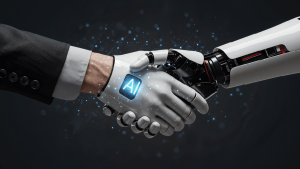
AI-driven workday optimization has emerged as a strategic priority rather than an experimental add-on. By applying AI to streamline everyday tasks, automate repetitive approvals, anticipate employee needs, and surface intelligent recommendations, organizations can transform how work flows across teams. What began as isolated chatbots or small automation pilots is now evolving into enterprise-wide AI orchestration that reshapes productivity at scale.
Why now: the convergence of data, agents, and skills intelligence
Three trends make wide-scale workday optimization feasible today. First, HR and business systems hold richer, unified data sets (skills, performance, learning, payroll) that AIs can analyze in context. Second, businesses are rolling out task-focused AI agents and workflow engines that can anticipate and act on routine needs — from expense approvals to succession nudges. Third, skills-first talent architectures let organizations match people to work dynamically, which AI can scale. These advances mean AI can do more than answer FAQs: it can orchestrate multi-step processes and nudge people at the right time.
Practical integration blueprint: four pillars
Below is a pragmatic, vendor-agnostic roadmap HR and IT teams can use to embed AI-driven optimization into enterprise workflows.
- Start with high-friction workflows, not shiny tech.
Map the employee journey end-to-end and prioritize use cases that create measurable time savings or revenue impact — e.g., offer-to-accept timelines, manager approval loops, skills-based internal mobility, and learning-path recommendations. Pick 2–3 high-value flows for a first wave, then instrument them for data and telemetry so you can measure before/after impact. - Unify the data layer and canonical skill model.
AI effectiveness depends on consistent data. Implement a single source of truth for worker profiles, role metadata, and learning assets (or use a vendor feature that provides this capability). A shared skills taxonomy allows algorithms to power targeted reskilling, automated succession suggestions, and smarter job matches. - Layer in intelligent orchestration and agents.
Replace brittle, manual handoffs with an orchestration layer that can trigger tasks across HR, finance, and IT systems. Agentic AI — configured with guardrails and human-in-the-loop checkpoints — can surface actions (e.g., “This candidate meets 87% of the skills; suggest an internal referral”) and execute low-risk steps (like routing standard approvals). Make sure agents log decisions and offer transparent rationale so humans can audit or intervene.
- Govern for trust and continuous learning.
Define policies for data privacy, explainability, and bias testing before scaling. Build feedback loops so managers and employees can correct or rate AI recommendations; feed that feedback back into model retraining and UX improvements. Communicate clearly about what the AI will and won’t do — transparency drives adoption and mitigates fear. Independent reviews or human reviewers should own final decisions for high-stakes actions (hiring, promotion, discipline).
Measuring impact — what to track
Quantify ROI through both speed and quality metrics. Speed metrics include reduction in time-to-hire, approval cycle time, or time spent on routine admin tasks. Quality signals include internal mobility rates, training completion tied to performance gains, and manager satisfaction with candidate fit. Don’t ignore downstream finance signals — lower contingent labor costs, reduced overtime, or faster project ramp-up are tangible outcomes executives care about.
Integration pitfalls and how to avoid them
- Over-automation too soon: Automating decisions without human checks for nuanced judgment erodes trust. Keep humans in the loop for ambiguous or sensitive tasks.
- Siloed pilots: If HR builds point AIs that can’t talk to finance or IT, you’ll fragment the employee experience. Design flows with cross-functional ownership and an orchestration layer.
- Weak data hygiene: Garbage in, garbage out. Invest in data cleanup, standardized role definitions and skill tags up front.
Also Read: AI-Driven Workday Optimization: The New Standard for Smarter, Faster Decision-Making
Change management: the human side of optimization
Adoption is as much cultural as technical. Frame AI as an augmentation that frees employees from repetitive work so they can focus on higher-value tasks, coaching, strategy, creativity. Provide role-specific training (managers, recruiters, line workers) and sandbox environments where teams can test agent suggestions without risk. Celebrate early wins publicly: faster offers, a manager saved hours weekly, or a successful internal transfer that avoided external hiring.
Vendor considerations and ecosystem options
When selecting platforms, assess three capabilities: (1) native skills and talent models, (2) orchestration/agent capabilities that reach beyond HR into finance and IT, and (3) data governance and audit trails. Partnerships between HR platforms and collaboration or CRM vendors are also accelerating: cross-platform agents that surface HR actions in collaboration tools make the experience seamless for employees. Recent product releases and alliances show vendors are prioritizing embedded AI and cross-system orchestration, a signal to evaluate platform roadmaps, not just current features.
Final note
The race isn’t about who adopts every AI feature first. It’s about who integrates AI thoughtfully across workflows, measures real business outcomes, and maintains human oversight where it matters. Organizations that pair a clear data foundation with orchestration, good governance, and focused change management will turn AI-driven workday optimization into sustained productivity gains, and, critically, a better employee experience.