Beyond Agentic AI: Why Multiagent Systems Could Become the Next Operating Model for Enterprise HR
Stay updated with us
Sign up for our newsletter
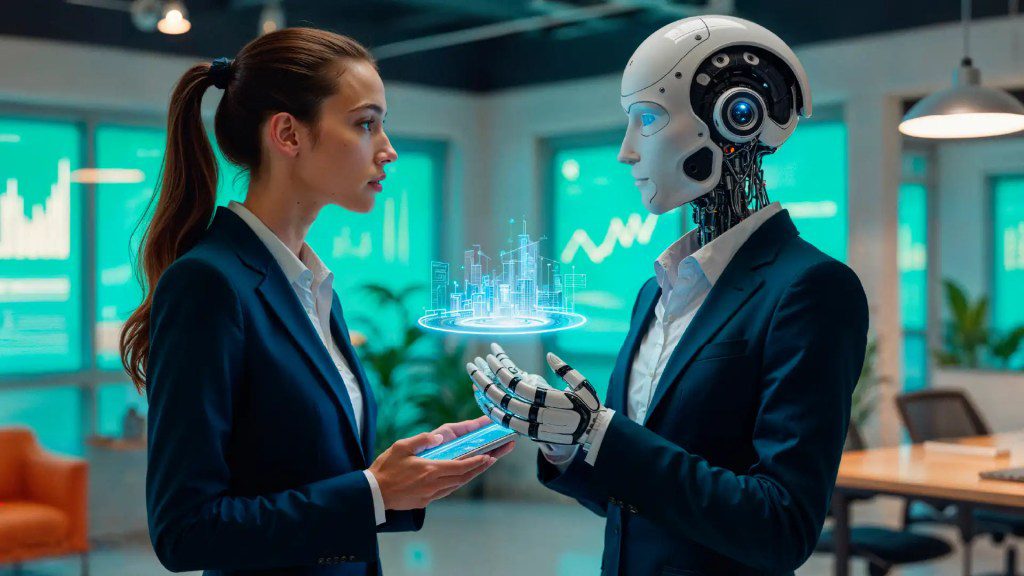
Artificial intelligence is entering a new phase of enterprise adoption. Over the past two years, organizations have focused primarily on deploying AI assistants and copilots to improve individual productivity. These systems have demonstrated their ability to summarize meetings, draft communications, answer employee queries, and automate routine administrative work. While these capabilities have delivered measurable efficiencies, they represent only the first stage of AI maturity.
A more sophisticated model is now emerging, Multiagent Systems (MAS).
Rather than relying on a single AI model to perform isolated tasks, multiagent systems consist of multiple specialized AI agents that collaborate to achieve a common objective. Each agent performs a distinct role, shares information with other agents, and collectively manages workflows that would traditionally require coordination across multiple human teams.
Although the concept originated in distributed computing and autonomous systems, its enterprise applications are expanding rapidly. For HR technology leaders, multiagent systems have the potential to redefine how recruitment, workforce planning, employee services, learning, and talent management are delivered.
The conversation is therefore shifting from “How can AI assist HR professionals?” to “How can intelligent agents collaborate to execute HR processes autonomously while keeping humans in control?”
HR Is Moving Toward Distributed Intelligence
Modern HR operations are becoming increasingly complex.
Organizations simultaneously manage global hiring, internal mobility, workforce planning, learning ecosystems, payroll operations, compliance obligations, employee experience initiatives, and AI governance. Each function depends on different datasets, technologies, and decision-makers.
Traditional HR technology platforms often integrate these functions through shared databases. Multiagent systems introduce a different architectural approach.
Also Read:The HRTech ROI Crisis: Why HR Leaders Are Being Asked to Prove Business Value in the AI Era
Instead of centralizing every decision, intelligence is distributed across multiple autonomous agents, each responsible for a clearly defined business capability.
For example, a workforce planning agent may identify emerging skill shortages. A learning agent can immediately recommend targeted development programs. An internal mobility agent may simultaneously identify qualified employees for redeployment, while a recruitment agent begins evaluating external talent markets if internal capacity proves insufficient.
Rather than operating as disconnected applications, these systems collaborate continuously to support workforce strategy.
Decision Velocity Will Become a Competitive Advantage
One of the most significant benefits of multiagent systems lies in their ability to accelerate organizational decision-making.
HR decisions rarely occur in isolation.
Hiring influences onboarding. Learning affects internal mobility. Performance data shapes succession planning. Workforce planning impacts recruitment budgets. Compliance requirements influence employee policies.
Traditionally, coordinating these interdependencies requires multiple teams, numerous meetings, and considerable administrative effort.
Multiagent systems can analyze information across these functions simultaneously, enabling organizations to respond more quickly to workforce challenges while maintaining strategic alignment.
This increased decision velocity may become a critical differentiator in industries facing persistent skills shortages and rapidly changing market conditions.
Human Oversight Remains Essential
The growing autonomy of AI agents inevitably raises concerns regarding accountability.
Unlike conventional automation, multiagent systems may generate recommendations through interactions between several intelligent agents. Understanding how specific decisions were reached therefore becomes more complex.
This makes governance significantly more important.
Organizations will need clearly defined operating principles regarding which decisions remain fully autonomous, which require human approval, and which demand executive oversight.
Also Read: Beyond Resume Parsing: Why AI Privacy Is Becoming Recruitment’s Biggest Governance Challenge
Recruitment decisions, compensation recommendations, performance evaluations, and workforce restructuring initiatives will continue to require human judgment, regardless of technological capability.
HR Leaders Must Prepare for New Governance Models
As organizations adopt multiagent architectures, governance frameworks must evolve accordingly.
Traditional AI governance typically focuses on individual models, algorithmic bias, and data quality.
Multiagent systems introduce additional considerations.
Leaders must establish mechanisms to monitor interactions between agents, validate shared decision pathways, manage conflicting recommendations, and ensure accountability across autonomous workflows.
Questions that HR executives should begin addressing include:
- How are responsibilities allocated across AI agents?
- Which agent has decision authority within specific workflows?
- How are conflicting recommendations resolved?
- What audit mechanisms demonstrate regulatory compliance?
- Where should mandatory human intervention occur?
The HR Technology Market Is Already Evolving
Enterprise software vendors are rapidly incorporating agentic capabilities into their platforms.
While today’s solutions remain relatively focused on individual AI assistants, the industry direction is clear. Future HR technology platforms are expected to coordinate multiple specialized agents capable of executing increasingly sophisticated business processes.
Recruitment, employee service management, learning administration, workforce analytics, payroll validation, and compliance monitoring represent early candidates for this evolution.
Organizations evaluating future HR technology investments should therefore assess not only current AI capabilities but also whether platform architectures are prepared to support collaborative AI ecosystems.
The transition toward multiagent systems may prove as significant as the earlier shift from on-premises HR software to cloud-based Human Capital Management platforms.
Strategic Implications for HR Leaders
The emergence of multiagent systems requires HR leaders to reconsider several long-standing assumptions.
Technology strategy will become inseparable from workforce strategy. HR operating models may evolve from process management toward ecosystem orchestration. Employee roles will increasingly emphasize judgment, relationship management, ethics, and organizational leadership while intelligent agents execute operational activities.
This transition also creates new opportunities.
Organizations capable of combining autonomous AI coordination with strong governance, transparent decision-making, and human oversight will be better positioned to improve workforce agility without compromising employee trust.
The competitive advantage will not come from deploying the greatest number of AI agents. It will come from designing systems where humans and intelligent agents complement one another effectively.
Write to us [wasim.a@demandmediaagency.com] to learn more about our exclusive editorial packages and programmes.