
The Future of Smart Cities with AI and IoT Integration
The evolution of the ‘smart city’ has shifted from being a futuristic fantasy to present reality with the help of artificial intelligence and the Internet of Things in creating an amalgamated urban infrastructure. Cities all over the world are busy setting up interconnected networks of sensors, devices, and AI-powered analytics. This revolutionizes how a city develops into an efficient and sustainable area with a more human-friendly space.

The Smart City Ecosystem: AI and IoT Working Together
Modern-day smart city initiatives depend significantly upon the convergence of both AI and IoT. The IoT consists of devices that are defined by the physical attributes and sensory systems, which are found in streets, buildings, current-use public spaces, and vehicles, to be able to continuously collect real-time communication data within the urban landscape. Such continued data feed will be used by AI systems to recognize patterns, predict needs, and recommend measures, solutions or even automate their implementation.

Transforming Urban Planning Through Data
Old urban planning relied mainly on patchy data sets, infrequent surveys, and old-time records, which quickly became outdated in the rapidly changing city landscape. The application of AI and IoT is fundamentally changing this approach
Real-Time Urban Monitoring
Comprehensive sensor networks among cities, such as Barcelona and Singapore, have enabled real-time communication between these cities and the feedback it provides about the dynamics of the city. Such systems cover everything from the flow of pedestrians, space usage and air and noise quality levels.
Predictive Urban Development
AI systems can be fed historical data along with present data trends to project future possible scenarios of urban development. This means that better decisions can be made while at the same time identifying potential problems early on before they materialize.
Revolutionizing Traffic Management
Billions are spent, and thus wasted, each year through loss of productivity, wastage of fuel, adverse impact on the environment, and traffic congestion. Smart traffic management systems have become one of the most widely adopted applications of artificial intelligence and the Internet of Things in cities.
Adaptive Traffic Control Systems
An example of such a system is the AI-enabled traffic light systems in cities like Pittsburgh that constantly adjust their timing for signals according to real-time traffic conditions. These systems rely on a combination of road sensors capturing camera feeds and machine learning algorithms to dynamically optimize traffic flow.
Integrated Mobility Platforms
The development of urban mobility is increasingly leaning towards integrated mobility platforms harnessing data combined from different transport modes. With the Smart Columbus Operating System, such aggregation of data was seen in Columbus, Ohio. This brought together data from public transit, ride-sharing services, parking systems, and traffic sensors to provide optimal transportation recommendations to citizens via one app interface.
Congestion Forecast and Prevention
Cities like London and Tokyo have deployed AI systems that monitor historical traffic behavior with the aid of weather forecasts, event calendars, and real-time conditions to predict congestion before it happens. These allow traffic management centers to implement preventive measures such as changing signal timing, suggesting another route for the traffic, or altering temporary lane configurations.
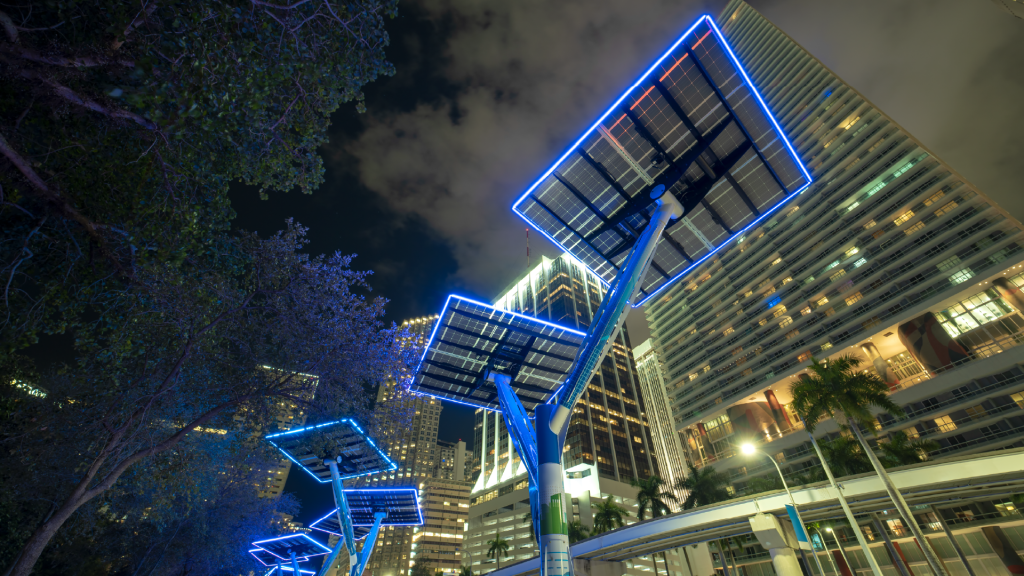
Energy Optimization and Sustainability
Energy management, therefore, is another important area where AI and IoT integration is providing smart cities with massive benefits.
Smart Grid Management
The traditional power grid is turning into a smart grid with built-in sensors that will monitor electricity flows in real time. AI systems will analyze such data in order to adjust supply and demand, incorporate renewable sources, and even predict outages before they happen. These systems include peak-demand response tactics, which encourage reduced usage or move some non-essential usage to off-peak hours.
Intelligent Building Management
Commercial buildings account for between 30% and 40% of the energy consumption of every city. In cities like New York and Tokyo, the building management systems enabled by IoT investigate occupancy, temperature, lighting, and equipment status through sensors. AI algorithms then optimize energy use through automatically driving HVAC systems, lighting, and other functions of the building in real time and according to forecasts of needs.
Public Lighting Optimization
The smart lighting systems in Copenhagen and Los Angeles analyzed pedestrian information, vehicular traffic, and surrounding light to ensure optimum brightness. What counts more is that these systems save energy in comparison to traditional street lighting, and they do so while respecting safety standards.
Challenges and Considerations
Some challenges concerning the use of AI and IoT technologies for smart cities include:
Privacy and security
The very extensive data collection in cities immediately raises concerns about the privacy of the citizens. Hence, smart city planners have to weigh the benefits against the concerns surrounding data collection. This makes a strong case for establishing a cybersecurity framework immediately.
Digital Equity
This means that as cities become more digitized, individuals in those cities have to receive equal access to technology benefits. Smart city programs should also consider how to address the possible “digital divides,” for instance, by building inclusive systems and access to technology for all communities.
Infrastructure Investment
Smart city technologies usually require a very heavy upfront investment for both physical infrastructure and digital infrastructure, even though, in the end, it pays for itself. Municipalities usually have trouble getting that initial funding.
The Path Ahead
Looking towards the future of smart cities, these emerging trends will show the greatest promise:
Digital Twins
Cities that have been built and completely operationalized as “digital twins” means that virtual replicas of the physical city interconnected with real-time data from IoT sensors would allow planners to visualize current conditions and test potential interventions in a risk-free virtual environment before implementing them.
AI-Enabled Citizen Engagement
Next-generation smart cities are moving away from the traditional top-down approach to technology implementation and top-down decision-making toward collaboration with citizens in collecting data and making decisions. Mobile apps that allow citizens to report problems, participate in the planning process, and provide data are increasingly becoming indispensable elements of the smart city ecosystem.
Resilience-Focused Planning
Climate change has become a top priority for resilience in smart city initiatives. By integrating AI with IoT, cities are starting to develop capabilities for monitoring and managing flood risks, optimally using stormwater facilities, and coordinating emergency responses during severe weather events.
Conclusion
Through AI and IoT integration, city areas will be transformed in ways unimaginable. With the help of huge amounts of data collected and churned through automated digital techniques, these create possibilities for cities to be smarter, greener, and increasingly tailored to their citizens. While there remain challenges, such as those of privacy and security, the trajectory of our urban future will be increasingly data-driven.
If you liked the blog explore this:
AI-Powered Digital Twins in Manufacturing: Transforming Production, Maintenance, and Efficiency
AI-Powered Digital Twins in Manufacturing: Transforming Production, Maintenance, and Efficiency
